
What Is the Best Season for Roof Replacement in Towson?
Published October 11, 2026
By Roof Replacement Crew • Towson, MD
Timing affects price, scheduling and installation quality. Here is the honest seasonal breakdown for roof replacement in Towson, MD.
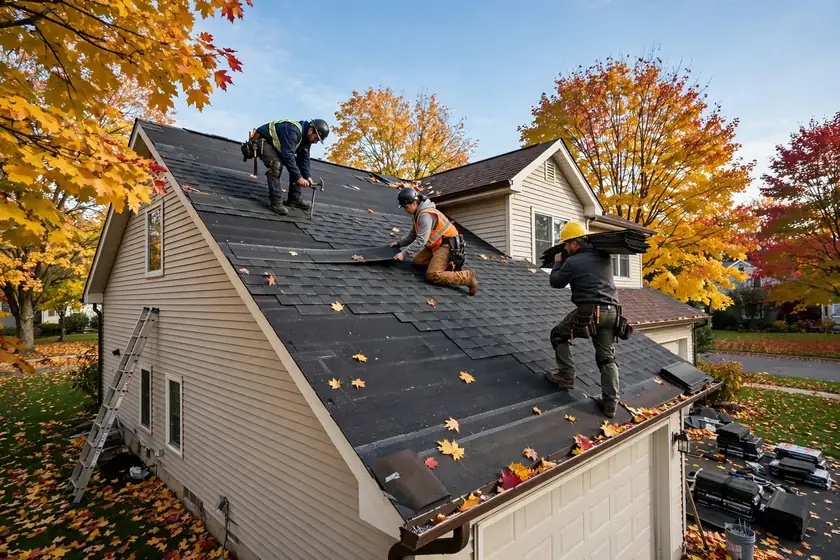
Fall: the sweet spot
Stable temperatures (ideal for shingle sealant activation), settled weather patterns and crews working efficiently. The catch: everyone knows it, so book 4–6 weeks out.
Spring: the runner-up
Good temperatures and availability before the rush — but Maryland spring storms can cause rescheduling. Flexible scheduling helps.
Summer: hot but workable
Shingles seal fast in heat, and scheduling is easy. Downsides: extreme attic heat slows crews, afternoon thunderstorms interrupt work, and it is the least comfortable season for the crew (which matters for quality).
Winter: possible with caveats
Roofing happens year-round in Maryland. Cold requires hand-sealing shingles and careful handling of brittle materials, but off-season pricing and immediate scheduling are real advantages.
The real answer
The best season is before you need it. A planned fall replacement beats an emergency winter one on price, stress and material availability every time.
What This Means for Your Towson Roof
Towson's humid subtropical climate swings from hot, humid summers to freeze-thaw winters, and nor'easters rolling up the I-95 corridor batter shingles with wind-driven rain. Summer thunderstorms along the I-695 Beltway add hail risk. That is why timing and material choice matter more than most homeowners realize — a decision made this year protects your home for the next 25 to 50 years.
The Roof Replacement Crew Approach
Every project starts with a photo-documented inspection and a line-item proposal — no vague lump sums. Our experienced roofing specialists handle tear-off, decking repair, underlayment, flashing, ventilation and the finished roofing system, and we clean up with magnetic nail sweeps so your yard is safe the same day.
Local Context: Towson, MD
Colonials, brick ranchers and Cape Cods from the 1940s through the 1970s fill neighborhoods like Rodgers Forge, Stoneleigh and Wiltondale — most on their second or third roof, and many due for full replacement.
Questions About Your Roof?
Call Now — talk to your local roofing team at (888) 974-0663.
Mon-Fri: 8:00 AM - 6:00 PM, Sat: 9:00 AM - 4:00 PM, Sun: Closed • Our call representatives are available 24/7 for emergencies.
What Each Season Actually Costs You
Spring and fall are the industry's favorite windows for good reason: moderate temperatures let sealant strips bond properly and crews work efficiently, which shows up in the quality of the installation. But "best season" also means best price, and that is a different calendar. Late winter — February into early March — is when schedules are thinnest and pricing is most flexible; the trade-off is weather delays, since shingles should not be installed on frozen decks and sealants need warmth to set.
Summer brings long daylight and fast scheduling, but Towson's heat and pop-up thunderstorms compress the safe working hours and can pause a tear-off mid-day. Emergency replacements, of course, happen on the storm's schedule, not yours — a tree through the roof in August gets replaced in August. The practical takeaway: if your roof's replacement is elective, book the shoulder seasons for ideal conditions or late winter for ideal pricing; if it is urgent, do not wait for a season, because every storm that hits a failing roof writes a bigger invoice.
The Late-Winter Discount Is Real
February and early March are the industry's quiet months in Maryland — crews are available, suppliers are not surging, and proposals reflect it. The catch is weather: shingles need adequate warmth for sealant strips to bond, and nobody should tear off into a forecast with freeze risk. The contractors worth hiring manage this with weather windows rather than wishful thinking, scheduling the build for a mild stretch and drying-in the same day regardless. If your roof's replacement is elective and your schedule is flexible, a late-winter booking often buys the same roof for meaningfully less than peak-spring pricing — just confirm the crew's cold-weather protocol before you sign, not after the first frost delay.
One last filter for any season you choose: ask what temperature the crew requires for sealant strips to bond properly, and what their rain-day protocol covers when a forecast shifts mid-project. The answers reveal whether off-season pricing comes with professional discipline or with corner-cutting — and that distinction matters more than the calendar month on the contract.
Frequently Asked Questions
Yes — with hand-sealing and proper handling. Modern shingles install fine in cold when crews follow winter procedures.
Often, yes — winter and late-summer scheduling gaps can mean better pricing and faster start dates.
4–8 weeks for peak fall season; 1–2 weeks off-season. Emergency work is always prioritized.