
Roof Ventilation Upgrade in Towson, MD
In short: Most premature roof failures trace to poor ventilation: superheated attics cook shingles from below while winter moisture rots decking. Replacement fixes it. Serving Towson ZIP codes 21204, 21212, 21286 and 21239. Get a free attic ventilation check with your estimate — call (888) 974-0663.
Balanced intake and exhaust that protects your new roof — and your shingle warranty.
Most premature roof failures we see trace back to poor ventilation: superheated attics that cook shingles from below, winter moisture that rots decking, and voided manufacturer warranties that require balanced airflow. A ventilation upgrade pairs continuous ridge exhaust with clear soffit intake — typically 1 square foot of net free vent area per 150 square feet of attic — verified with airflow math, not guesswork. It is the highest-ROI add-on to any replacement.
Signs You Need roof ventilation upgrade in Towson
- Attic hotter than 130°F in summer
- Frost or moisture on attic sheathing in winter
- Curling shingles on a relatively young roof
- Mold or mildew smell in the attic
- Bathroom fans venting into the attic
What's Included
- Attic ventilation calculation and design
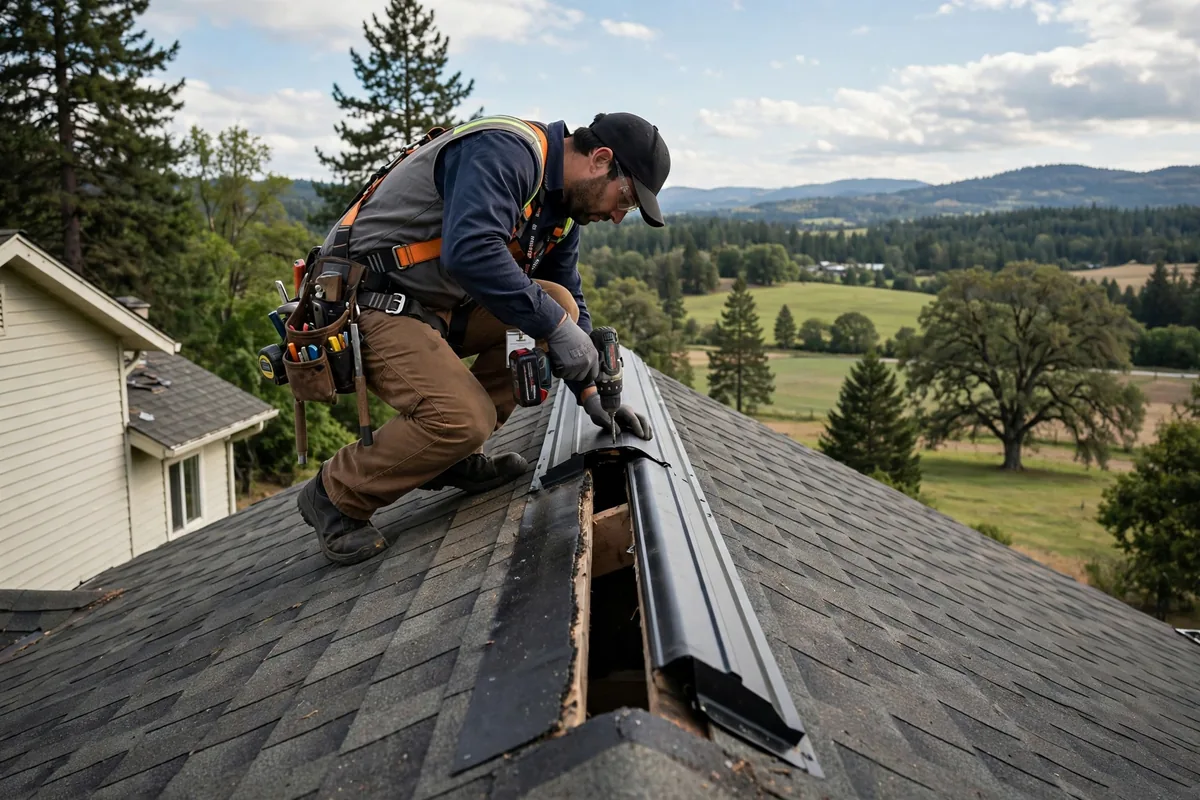
- Continuous ridge vent installation
- Soffit intake clearing or installation
- Baffle installation at eaves
- Powered vent assessment where appropriate
What to Expect on the Day
Most visits are straightforward. We confirm your appointment by phone, arrive in a marked vehicle, and walk you through what we will do before we start. You do not need to prepare anything — just make sure we can access the areas we discussed when you booked. After the work is done, we walk the results with you, answer every question, and leave the property clean.
If we find anything unexpected once work begins — rotted decking under old shingles, for example — we stop, photograph it, and explain your options with exact pricing before continuing. You approve everything. That is how your local roofing team earns repeat business across Towson.
Get Answers About Your Roof
Roof Replacement Crew — your local roofing team. Call (888) 974-0663 and talk to experienced roofing specialists.
Roof Ventilation Upgrade in Towson, MD: Local Considerations
Towson's humid subtropical climate swings from hot, humid summers to freeze-thaw winters, and nor'easters rolling up the I-95 corridor batter shingles with wind-driven rain. Summer thunderstorms along the I-695 Beltway add hail risk.
Colonials, brick ranchers and Cape Cods from the 1940s through the 1970s fill neighborhoods like Rodgers Forge, Stoneleigh and Wiltondale — most on their second or third roof, and many due for full replacement. That local context shapes every roof ventilation upgrade we perform — from material choice to the details we double-check.
The Intake-Exhaust Balance Most Roofs Lack
Attic ventilation is simple physics that most roofs get wrong: cool air enters low through soffit or eave intake, warms as it travels up the underside of the deck, and exits high through ridge or roof vents, carrying heat and moisture with it. The building-science rule of thumb is 1 square foot of net free vent area per 150 square feet of attic floor (1:300 where a vapor barrier is present), split evenly between intake and exhaust. What we find in Towson attics, especially pre-war homes in Anneslie, Stoneleigh and Rodgers Forge, is exhaust without intake — ridge vents or box vents up top with soffits painted shut or never vented below. Without intake, exhaust vents just depressurize the attic and pull conditioned air up from the living space.
The vent menu each has a role. Continuous ridge vent with clear soffit intake is the gold standard for most pitched roofs: even airflow along the whole ridge, no moving parts, invisible from the street. Box (static) vents work where ridge vent is impractical, such as short ridges on hip roofs. Turbines move more air but depend on wind and can look out of place on a colonial. Powered attic fans move the most air — and can backdraft combustion appliances or pull conditioned air through ceiling leaks if the attic is not properly air-sealed, which is why we specify them cautiously. Gable vents, common on older Towson homes, short-circuit ridge-and-soffit systems by giving air a lazy sideways path; they usually get sealed when a proper system goes in.
What Poor Ventilation Destroys
- Shingles from below — trapped attic heat cooks asphalt, curling edges and voiding manufacturer warranties that require balanced ventilation.
- Decking from within — moisture from bathrooms and kitchens venting into the attic (instead of outside) rots the deck and grows mold.
- Ice dams in winter — heat escaping through the roof melts snow that refreezes at the cold eaves, pushing water uphill under shingles.
- Energy bills year-round — superheated attics in summer force air conditioners to fight heat radiating through the ceiling.
The Reroof Window
Ventilation is cheapest to fix when the roof is already off: cutting in a ridge vent slot, opening or adding soffit intake, and rerouting bath and kitchen exhausts through the roof with proper terminations are all straightforward with the deck exposed or accessible. As a standalone upgrade it is still worthwhile, but bundling it into a replacement means one mobilization, one crew, and a system designed as a whole rather than patched together.
Painted-Shut Soffits
The most common ventilation defect in Towson's pre-war housing stock is also the most invisible: soffits that were never vented, or were vented and then painted shut through decades of repaints. From the ground the eaves look finished and correct; in the attic, the ridge vent up top is starved of intake and the air barely moves. The fix depends on the house. Where soffits can be opened, continuous vent strips restore the intake path the system was designed around. Where the architecture resists — shallow eaves, boxed cornices with no cavity — alternatives like vented drip edge or low-profile intake vents at the eave line create the airflow without reconstructing the cornice. What does not work is adding more exhaust to an intake-starved attic; every new roof vent without matching intake just depressurizes the attic further and pulls more conditioned air up from the living space. Intake first, always — it is the unglamorous half of ventilation and the half that determines whether the system works at all.
Frequently Asked Questions
Hot attic in summer, frost on sheathing in winter, and curling shingles are the classic trio. We measure intake and exhaust during every replacement estimate.
Ridge vents with proper soffit intake provide more even airflow across the whole attic. Box vents create hot spots between vents.
Protect. Most shingle manufacturers require balanced ventilation for full warranty coverage — poor ventilation is a common warranty exclusion.
Related Services
in Towson, MDMetal Roof Replacement
in Towson, MDTile Roof Replacement
in Towson, MD